
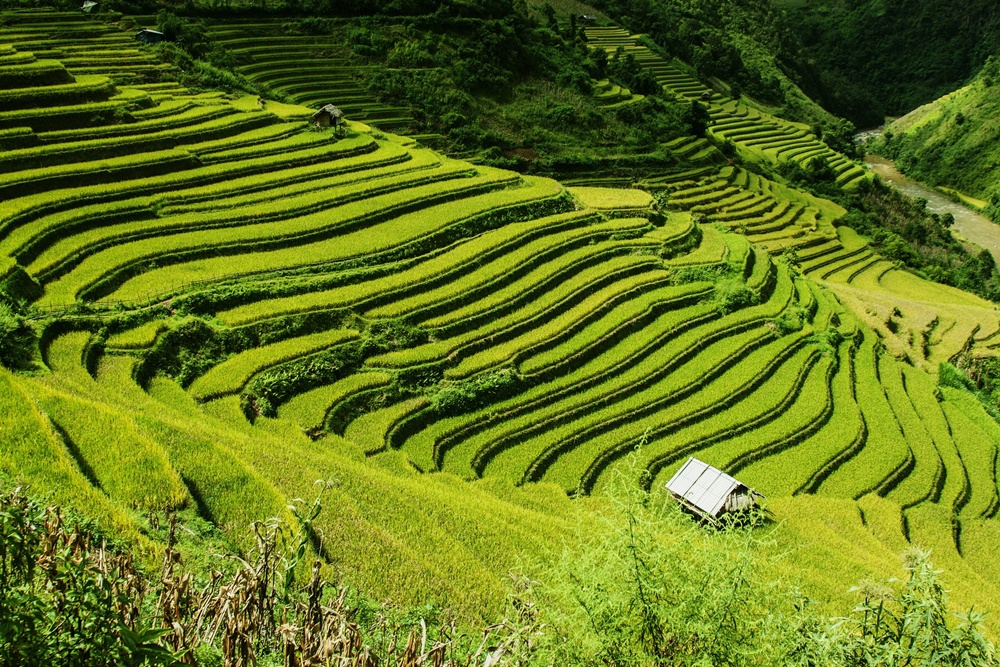
Intensive agriculture, or intensive farming, is characterized by higher use of inputs such as capital and labour for every unit land area that is cultivated, and this way, it is designed to produce higher yields. By using smart farming system and techniques, intensive farming is able to produce higher yields and achieve economies of scale.
Industrial agriculture has been supported through planting multiple crops a year, reducing fallow periods and increasing cultivars. It also uses fertilisers, plant growth regulators, pesticides, mechanization and smart farming technologies.
The evolution of intensive agriculture
Between the 16th and 19th centuries, agricultural and industrial development complemented each other. New agricultural techniques such as enclosure, mechanization, four-field crop rotation and selective breeding increased agricultural production and freed labour for the industrial revolution.
With the industrial revolution, threshers and tractors replaced draft animals and made it possible for individual farmers to manage large farms. Scientific experiments also led to synthetic fertilizers and later synthetic pesticides.
Sustainable intensive agriculture and smallholder farms
Sustainable intensive agriculture identifies carbon present in humus as a critical factor in plant growth. This kind of agriculture can be adopted by large industrial farms as well as smallholder farmers who choose sustainable intensive methods and appropriate technologies.
Sustainable agriculture is resilient, adaptable to change and does not deplete the resource base. Sustainable integrated farming systems include organic production, vertically integrated business, supply chain management and brand building.
Intensive integrated farming systems
Combining agriculture and livestock is an ideal system for smallholder farmers. Fodder comes from the farm, dung can be used as fuel, and animals recycle organic and crop residues from the farm.
Impact of integrated and specialized farming systems
Farms remain predominantly family-owned-and-operated around the world. Farming systems that have kept up with change are those that moved beyond commodity production and directly engage with the market.
ICT in agriculture and Sourcetrace solutions
Today agriculture gains from information communication technologies such as market information, trading facilities, weather information, peer learning, data collection, payments, loans and insurance. SourceTrace solutions offer mobile applications for crop enrollment, inspection modules and monitoring smart farming systems for better control.